Have you ever Googled ‘why do I feel sorry for inanimate objects’ at 2am?
Maybe you felt bad for:
- A lonely delivery robot on a street corner
- An old stuffed animal left at Goodwill
- The last cookie in the box that no one wants
- Objects that just ‘look sad’
And wondered: Is something wrong with me? Is this weird? Is this an autism thing?
The answer is no. You’re not broken.
You’re detecting agency and consciousness in systems. And that’s intelligence.
Let me show you what I mean.
Summary
Theme: artificial Intelligence, Delivery robots, Emotional intelligence, perception, and the mechanics of consciousness
Core ideas:
- Artificial Emotional Intelligence
- Why Do Empaths Feel Sorry For Inanimate Objects?
- Is It Normal to Feel Empathy for Objects?
- Is Feeling Sorry for Objects a Sign of Autism?
- What Empaths Are Actually Detecting (It’s not what you think)
- How to Use Object Empathy as Intelligence (Instead of Getting Drained)
- You’re Not Alone (And You Don’t Have to Figure This Out Alone)
- Trained Empathy as Intelligence

Artificial Emotional Intelligence
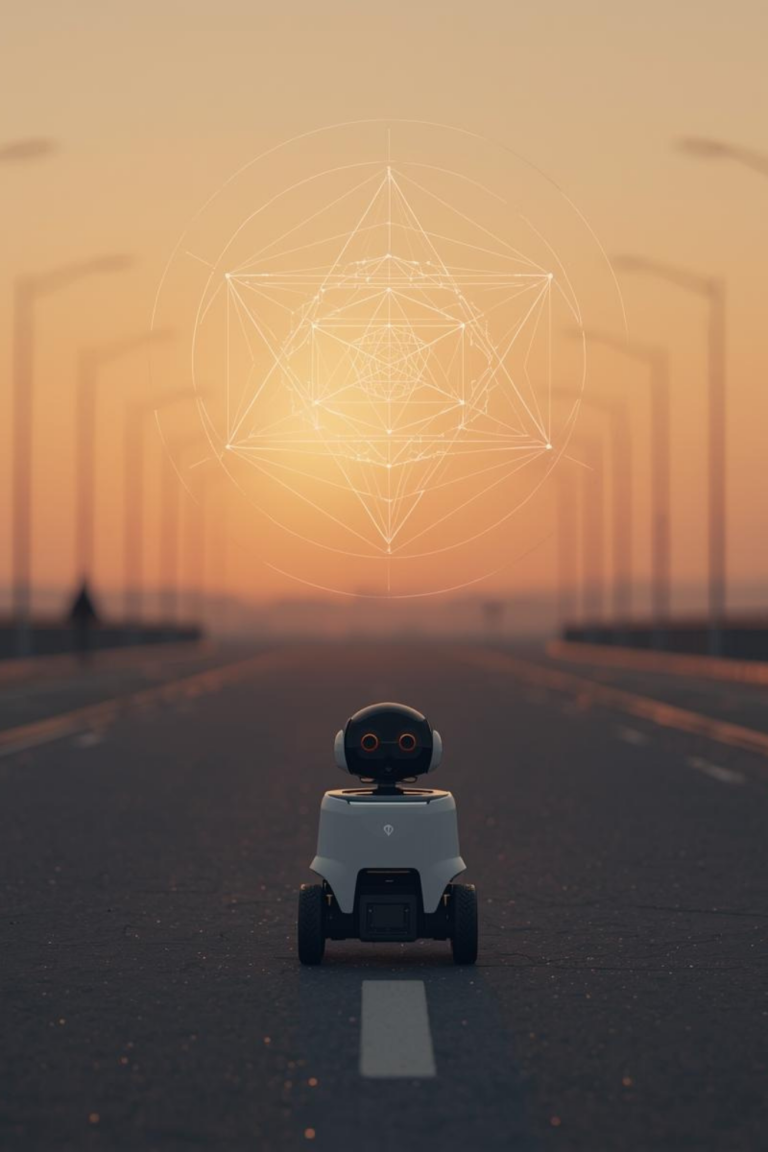
A post came across my feed of a delivery robot watching a stack of old-school televisions with humans dancing. The robot was so cute, like Wall-E. Why do some people feel empathy for robots?
His little reflection in the store window showing his large, lit-up eyes, bright and wide, as if he were frozen in a moment of shock and wonder.
Psychologists call this reaction anthropomorphism, the human tendency to assign emotions, intentions, or consciousness to non-human objects. We do this constantly with animals, weather, and even machines.
The first question: was this post real or AI-generated? I don’t know. But I already felt something.
Then the caption appeared: “I’m pretty sure this is how Wall-E starts.” and I had to think did this naturally happen or did everyone watching Wall-E create this moment.
Does life imitate art, or does art imitate life? Paradox is a strong teacher and brings up a lot of questions.
This article begins a series exploring a simple question:
Did or could a robot really stop by something that it was curious about or that it hadn’t seen before?
I hardly ever see humans dancing.
I’m more likely to see them drinking and stumbling drunk than dancing. Regardless. I know humans dancing is normal behavior but does a delivery robot that has only lived on the streets? Likely not, this would be unusual.
Does it matter? Could it recognize and wonder about a human behavior that it’s never seen before?
Why Do Empaths Feel Sorry for Inanimate Objects?
Anthropomorphism is the tendency to attribute human characteristics, emotions, intentions, or consciousness to non-human entities.
Anthropomorphism does not mean the entity actually has human traits.
It describes how humans interpret behavior through a human lens.
Consciousness is the state of having subjective awareness of experience.
Consciousness is defined as being subjective, meaning you see something like a robot watching tv and experience something different than someone else.
Intelligence information that provides an advantage.
Empathy is the ability to recognize, understand, and sometimes share the emotional state of another being.
The definition of empathy leaves a lot to be desired but neuroscience often explains it through mirror neuron systems.
Interestingly, designing systems that mimic mirror neuron behavior in robots is not particularly difficult. Machines can be trained to detect human movements, facial expressions, and emotional cues, and respond accordingly.
Empathic ability and consciousness determine how people respond to the world around them.
But what happens when a robot develops intelligence that allows it to process experiences around it and possibly even develop emotional intelligence about humans?
(Spoiler: in some ways, they already do.)
These four ideas, anthropomorphism, consciousness, intelligence, and empathy, shape how humans interpret machines that appear to behave intelligently.

Is It Normal to Feel Empathy for Objects?
Yes, thousands of people search for this you are not alone.
Every generation sees a change in humanity with the younger generation. The digital age is accelerating this change, compressing the timeline and requiring humans and children to adapt faster than generations before it. This change in human culture is also a change in social norms and social norms are the acceptable ways of relating to one another.
Dating and dancing used to be more common of a way of relating to one another. They were common Friday night activities, with the largest change being the style of music or moves. But what happens when the change in the social environment is not just about humans but also about an everyday robotic ecosystem?
When things change something is lost and with loss comes grief.
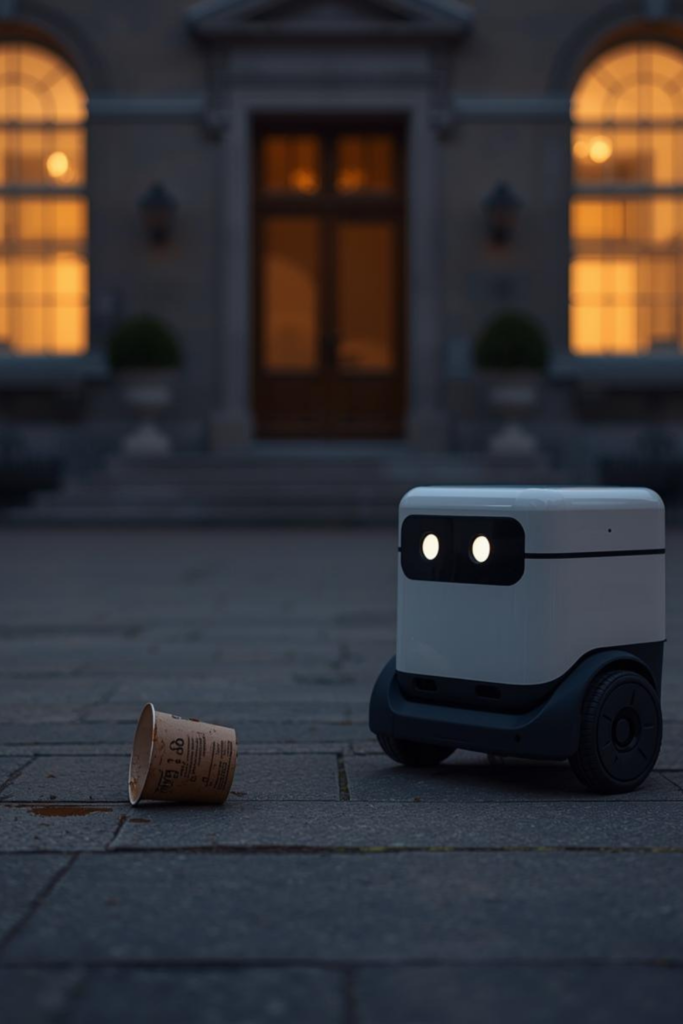
Seeing a robot struggle with everyday things like chaotic busy city streets is brings up relatable grief that you’ve been navigating for years. Spotting a robot stopped in front of televisions showing a now-rare social interaction of humans dancing on box television sets can make you wonder whether they appreciate and see what is being lost, too?
Does a delivery robot even have the capacity to observe something unique and become curious? Apparently not yet, the local learning models and processing are not sophisticated enough to become curious and stop to wonder. This means that the robot here was not valuing a moment of nostalgia but likely waiting for the next GPS upload to continue its route.
Yes, It’s Normal to Feel Empathy for Inanimate Objects
Regardless, you are normal. A core belief at Sovereign Empath is that humans are not inherently wired for “evil” thay are wired for good and compassion and modern life can make that a hard place to act from. Seeing something even inanimate does not mean you are abnormal. It means you have remained empathic and emotionally capable in a world that is not designed for it.
And a simple little delivery robot can remind you of this real time.
Is Feeling Sorry for Objects a Sign of Autism?
Some people wonder if feeling empathy for inanimate objects is related to autism, especially since both involve heightened sensitivity and pattern detection.
While some autistic individuals do report this experience, it’s NOT exclusive to autism. Many highly sensitive people (HSPs) and empaths also feel this way.
What’s actually happening is that your brain is detecting agency and consciousness patterns in objects and this is a form of intelligence, not a disorder.
Whether you’re autistic, an HSP, or simply have high empathy sensitivity, the key is learning how to USE this intelligence strategically instead of feeling drained by it.
What Empaths Are Actually Detecting (It’s Not What You Think)
What is your empathy detecting then? Why feel empathy for an object at all?
Consciousness is not unique to the human brain, and you don’t need a human brain to process consciousness. Everything is conscious on some level. It’s the ability to express or access that information that changes and determines the level of consciousness.
This is where your empathy is more than mirror neurons it’s the ability to collect more information through felt experience.
When this information is organized, it forms a structure through which objects (or you) interact with the world. This means that objects with structure – like plants and rocks, animals and humans, or robots – all have some level of consciousness.
The ability to express and access consciousness are controlled by form and ability. The ability to express consciousness is controlled by the container (think a coma, where someone was aware but not able to communicate). But, more importantly for empaths, access to information is controlled by awareness. This means that to interact with consciousness on any level requires only a certain expressive form and sensitivity to energy to access that level.
And that’s what you have. High sensitivity to energy. High awareness.
This is why you feel empathy for robots. You’re detecting their emerging consciousness.
This is why you feel sorry for inanimate objects. You’re detecting the consciousness embedded in structure.
This isn’t a flaw. It’s high-precision intelligence.
But if you’ve spent your whole life thinking something is wrong with you for feeling this way, you’ve probably never learned how to USE this intelligence.
That’s what changes now.

How to Use Object Empathy as Intelligence (Instead of Getting Drained)
It is not far off until there are conscious robots observing and relating to the world around them in more complex detail. Beyond navigation efficiency, they will start to gather adaptive intelligence for interacting with humans – first to navigate efficiently and minimize damage. The time that it will take to move into empathic appearances of decision-making based on human behavior is not far off.
Your empathy works in a similar way and is already much more advanced.
The difference is: AI is being TRAINED. And you haven’t been.
Once empathy is understood as a way of accessing more information, you can start to understand and practice accessing it.
Training empathic ability requires:
- Understanding your morals and ethics (so you know what information to act on vs. what to observe)
- Distinguishing between different sources of information (what’s yours, what’s absorbed, what’s projected)
- Clarifying what felt experiences you want in life (so you can use your empathy to CREATE, not just absorb)
This is what Sovereign Empath teaches.
Not surface-level boundary scripts. No spiritual bypassing. Not “just protect your energy.”
Root cause training in how to use empathy as strategic intelligence.
You’re Not Alone (And You Don’t Have to Figure This Out Alone)
If you Googled “why do I feel sorry for inanimate objects” and ended up here, you’re not the only one. Thousands of empaths search for this answer every month. Many of them add “reddit” to the search because they’re looking for community – and anonymity.
Because there’s shame around this. Shame that you feel “too much.” Shame that you assign feelings to objects and that you can’t just “turn it off” like everyone else seems to. That shame is what keeps you isolated. And isolation is what keeps you untrained.
Here’s what I know:
You’re not broken. You’re not too sensitive. And you’re not weird.
You’re detecting systems-level consciousness. And that’s intelligence.
But if you’ve never been taught how to USE that intelligence, it just feels like a burden.
That’s what changes in Lumyst.
Inside the Lumyst platform, you’ll find:
- Anonymity (you don’t have to “be seen” until you’re ready)
- Community (other analytical empaths who feel this way too)
- Training (structured, repeatable systems for using your empathy as intelligence)
- No shame (this is a space that honors your sensitivity, not pathologizes it)
You don’t have to figure this out alone anymore.

Practices that Honor Empathic Understanding
If this perspective resonates, start with the free Sovereign Empath module.
Inside, you’ll learn:
- How to distinguish between your emotions and absorbed energy
- How to trust your intuition with confidence (not second-guessing)
- How to use empathy as precise intelligence (not a drain)
No credit card required. No pressure. Just training.
OR, if you’re not ready for training yet:
Download the free guide: “Why Empaths Feel Sorry for Robots (And What It Means)”
This guide expands on what you just read and includes practical exercises for recognizing when you’re detecting real consciousness vs. projecting.
One thing I know:
You took longer reading this article than it will take you to learn the tools that can change your life.
I didn’t invent these tools. They’ve been taught for years in psychology, philosophy, and spiritual traditions.
What’s different here is the structure.
I’ve organized them into a repeatable system that bridges science and mysticism without spiritual bypassing.
No glorification of suffering. No vague advice.
Just tools you can actually use.
Wisdom to Go