

Sections
- A Practical Guide For Empaths
- What You Feel Is Not The Problem
- The Core Skill
- A Simple Practice
- Free Guide
- Free Training
A practical guide for empaths who feel too much and want to start using it strategically
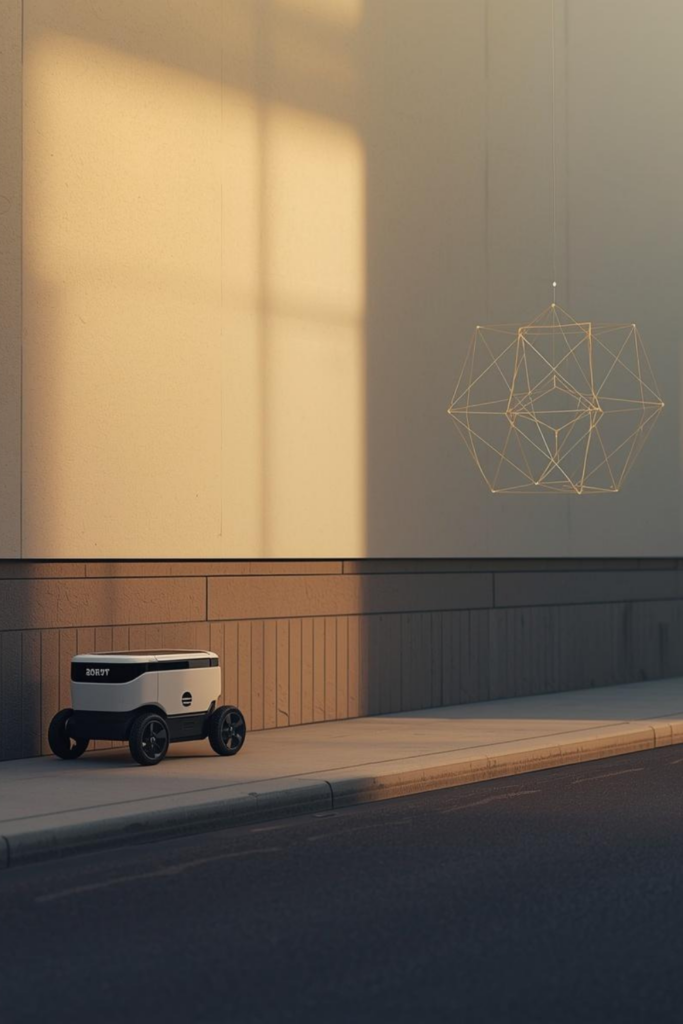
Have you ever felt sorry for a delivery robot stuck on a curb?
Or an old stuffed animal left at Goodwill?
Or the last cookie in the box that “no one” wants? (where did we all learn this?)
If you read that and thought “yes, and I thought something was wrong with me,” you’re not alone. Thousands of empaths search for answers to this every month.
In Part 1 of this series, I explained what’s actually happening when you feel empathy for objects.
Neuroscience explains neuro mirroring (why does neuroscience always feel cold), psychology says anthropomorphizing … and the third where sovereign rayne focues; you’re detecting systems-level consciousness. And that’s intelligence, not dysfunction.
But knowing what you’re doing doesn’t automatically change how it affects you.
You still feel drained. You still absorb everything. You still wonder if you’re too sensitive.
This article is about what to do next.
In Tuesday’s article we explored why humans instinctively feel empathy toward machines or other objects.
Today we’ll look at how to recognize when your brain is doing this in everyday life. This is where those therapy sessions on practicing cognitive behavior will be useful.
What you feel is not the problem; the problem is that you were never trained.
Most empath advice sounds like this:
- “Protect your energy”
- “Set boundaries”
- “Visualize a white light shield”
And maybe it helped. For a minute or a week.
Then you walked into a room and absorbed everyone’s tension anyway. Or you felt bad for a robot. Or you spent three hours recovering from a conversation that “shouldn’t” have been that hard.
Here’s why that advice doesn’t stick:
It treats your sensitivity like a leak to patch. But you’re not leaking. You’re detecting and defaulting (probably unconsciously).
Your empathy is a detection system. And you can’t block your own operating system.
The skill isn’t protection. It’s distinction.
The brain constantly searches for signs of agency and intention.
This ability helped humans survive, but for an emapths in modern environments it can lead us to misinterpret situations.

THE CORE SKILL: DETECTION VS. PROJECTION
When you feel empathy for an object; a robot, a plant, an old toy or a rude man. Two things might be happening:
1. Detection: You’re picking up on something real. A different level of subtle energy. Emerging consciousness in AI. Energetic patterns in structure. Emotional residue in inherited objects. A personal energetic potential (more on this later in the series).
2. Projection: You’re assigning YOUR emotions to the object. “I was left behind like that old toy.” “I feel stuck like that robot.” “He’s not that bad.” “They don’t mean it.”
Both are valuable. Neither is wrong.
But knowing the difference changes everything.
When you’re detecting, you’re gathering information about the world. When you’re projecting, you’re gathering information about yourself.
The practice is learning to ask: What am I detecting? What am I projecting? And what do I do with this information?
A SIMPLE PRACTICE: CONSCIOUS OBSERVATION
Next time you feel empathy for an object, try this:
STEP 1: PAUSE Don’t judge the feeling. Just notice it.
STEP 2: NAME IT “I feel [empathy/concern/sadness] for [this robot/plant/object].”
STEP 3: ASK “What am I detecting? What am I projecting?”
STEP 4: DECIDE “Is there action to take? Or is this just information to observe?”
Example:
- You see a delivery robot stuck on a curb.
- You feel bad for it.
- You ask: “Am I detecting its struggle (real)? Or projecting my own feeling of being stuck (projection)?”
- You decide: “I can help move it (action) or just observe and move on (information).”
This is empathy as intelligence.
TRACK YOUR PATTERNS
For one week, notice when you feel empathy for objects.
Journal:
- What object triggered empathy?
- What did I feel?
- What was I detecting vs. projecting?
- What did I learn about myself?
Patterns will emerge:
- Do you feel more empathy for objects when YOU feel lonely?
- Do you assign consciousness to objects with “faces” (robots, cars, stuffed animals)?
- Do you feel drained by certain types of objects (old, broken, abandoned)?
These patterns reveal YOUR empathic intelligence. They show you how your system works.
THIS IS JUST THE BEGINNING
The exercises above are diagnostic. They help you see how your empathy operates.
But real training goes deeper:
- How to distinguish your emotions from absorbed energy (not just with objects but with people, spaces, situations)
- How to trust your intuition with confidence instead of second-guessing
- How to help others without sacrificing yourself
- How to use empathy as precise intelligence, not a drain
That’s what Sovereign Empath teaches.

FREE GUIDE: WHY EMPATHS FEEL SORRY FOR ROBOTS (AND WHAT IT MEANS)
I created a guide that expands on everything in this article – the science of what you’re detecting, the philosophy of consciousness in objects, and more practical exercises.
[Download the Free Guide]
FREE TRAINING: SOVEREIGN EMPATH MODULE 1
If you’re ready for structured training – not just information, but actual practice – the first module of Sovereign Empath is free.
Inside you’ll learn:
- How to distinguish your emotions from absorbed energy
- How to trust your intuition with confidence (not second-guessing)
- How to help others without sacrificing yourself
- How to use empathy as precise intelligence (not a drain)
No credit card. No catch. Just training.
YOU’RE NOT BROKEN. YOU’RE UNTRAINED.
That’s what changes now.
See you inside, Lindsay