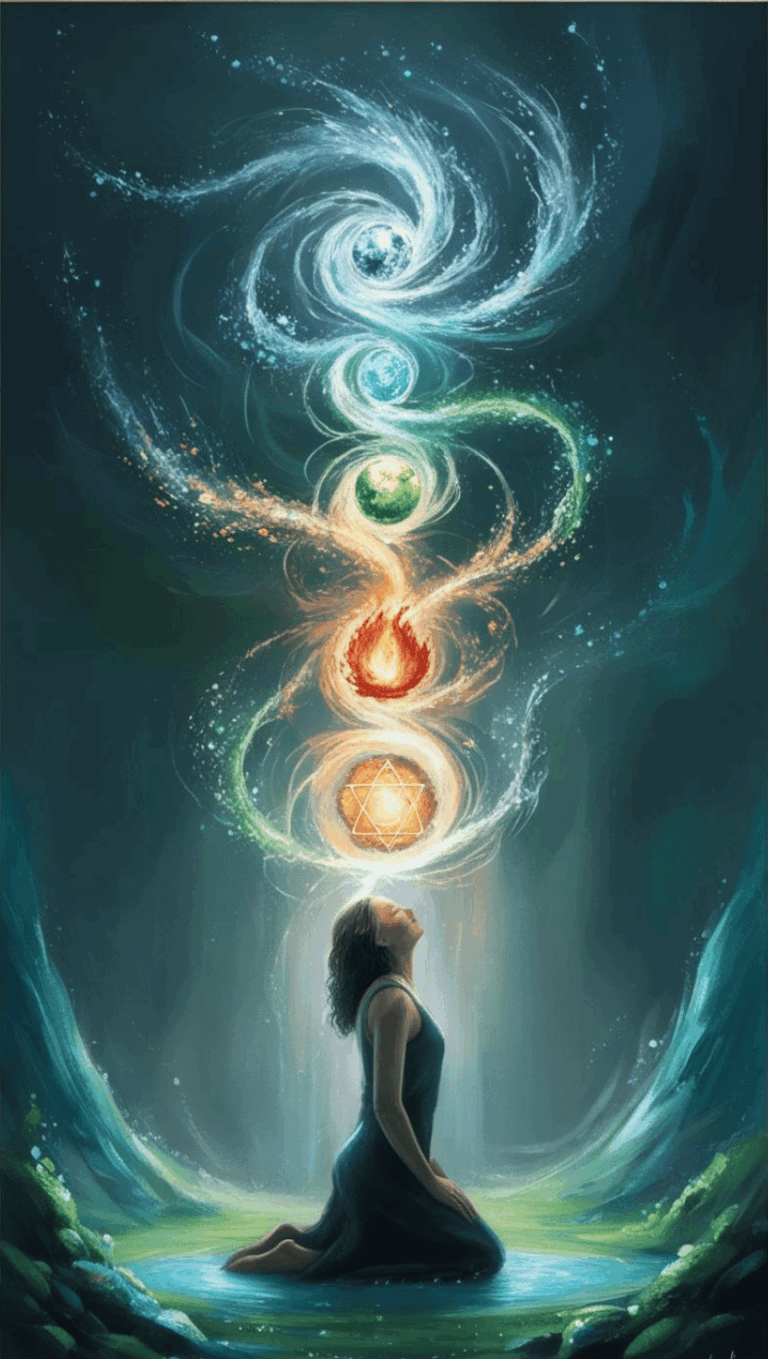

How to heal from narcissistic abuse begins with honest reflection.
Abuse exists on a spectrum, and the severity of narcissistic behavior often depends on the role that person played in your life: a parent, a partner, a close friend, or someone you once trusted.
- Ancient Teachings of Narcissism
- Modern Narcissism
- Psychological Roots of Narcissism
- The Evolution of the Term “Narcissist”
- The Bully–Victim Flip: The Modern Narcissist’s Favorite Trick
- Reclaiming Your Power: Seeing the Trick for What It Is
Why “Narcissist” Has Lost Its Meaning
But here’s the issue: in modern culture, narcissism has become so widely used that its meaning has been diluted.
It’s used to describe everything from bad manners to emotional manipulation, and in that ambiguity, the deeper forms of abuse get lost.
And that’s okay. This happens all the time in language, especially when certain terms grow in popularity.
People use the words they have available to try to describe their reality to others.
And sometimes, this becomes a kind of collective coping mechanism: It’s socially acceptable to say someone was “toxic” or “a narcissist.” But it’s often not acceptable, to others or even to ourselves, to name what really happened.
Accurate words can feel too extreme. Too risky. Subconsciously, we don’t feel safe naming the truth. Collectively, we don’t want to admit how bad things have become.
But here’s the problem: when we soften the language, we soften the truth. And when we soften the truth, we unintentionally delay the healing.
What the Myth of Narcissus Really Teaches Us
The original myth of Narcissus was never about manipulation. It was about self-absorption and disconnection. The harm today is that when we speak of narcissistic abuse, we’re often describing something far more severe:
A pattern of control, deceit, and emotional distortion that can be devastating to the person caught in it.
That’s why your healing needs to include clarity, not just about what happened, but about what it meant, how it worked, and how to recognize the pattern without getting caught in it again. Yes, you may have been a victim, but that’s not where your story ends. There is a path to healing, and it doesn’t require retelling the same story over and over. It requires truth, energy work, and emotional reclamation.
This article is the first step.
How to Heal from Narcissistic Abuse: The Three-Part Process
Healing from narcissistic abuse is a three-part process. First, you build awareness, understanding the scale of abuse, the nature of narcissistic behavior, and the language to describe it. Second, you work with your emotional body, grieving, clearing, and rebalancing the energy it left behind. Third, you build beliefs to avoid the abuse.
Surprisingly, this doesn’t have to take years. When you approach healing with honesty and energetic tools, it’s possible to shift more quickly. This article begins that journey by offering perspective, terminology, and tools to help you name what happened—and see through the pattern.
Part 1 will create an understanding of the origins of narcissism. The evolution of narcissism will create clarity in assessing and communicating the abuse.
Ancient Teachings on Narcissism

We now use the term “narcissist” as shorthand for people who gaslight, manipulate, and emotionally harm others.
But the original meaning was far less severe. And therein lies part of the confusio, and why many survivors aren’t receiving the depth of healing they need to access their sovereignty… or their magic.
In second-level teachings, we look to myth not just as entertainment or explanation, but as parables—maps that reveal how patterns play out across time, lineage, and consciousness.
One such myth begins with a beautiful young man named Narcissus and a nymph named Echo.
Narcissus falls in love with a reflection of himself. Echo, cursed by the gods to only repeat what she hears, falls in love with him.
When Narcissus calls out, “Is anyone here?” Echo replies, “Here.”
He says, “Let’s meet.” She echoes, “Let’s meet.”
But when she throws her arms around him, he recoils, startled and unwilling to receive what he didn’t truly ask for.
Narcissus didn’t promise her love. He didn’t manipulate her feelings. He simply never saw her.
And in that absence of presence and reciprocity, she disappears back into her cave.
In the end, Narcissus wastes away at the pond’s edge, enchanted by his beauty.
Echo fades until only her voice remains.
Myth vs. Modern Narcissist

Narcissus, in the original myth, was self-absorbed and emotionally unavailable—but he wasn’t manipulative.
Unlike today’s narcissists, he didn’t lie, gaslight, or intentionally cause harm. His story reflects disconnection, not predation.
A modern Narcissus wouldn’t just fall in love with his reflection, he would create a reflection for others to fall in love with. He’d mirror what Echo wanted to hear, then withdraw affection to create confusion. He wouldn’t ignore her, he’d bait and string her along, using emotional manipulation to feed his need for control.
Narcissism was first used in a psychological context in 1898 by Havelock Ellis, who described it as a form of self-admiration. That early usage, like the myth, did not account for the calculated manipulation we now associate with narcissistic abuse.
Today, the word “narcissist” is often used to describe someone who lies, distorts reality, and harms others to get what they want. This behavior falls on the lower end of the psychopathy spectrum, where charm is a weapon, and control is a form of safety. By today’s standards, the original Narcissus would barely register.
He wasn’t a predator. He was disconnected.
But modern “narcissists?” They don’t just look away.
They look right at you, they see you, and still choose to deceive.
Psychological Roots of Narcissism
Freud helped popularize the concept of narcissism and defined it in two distinct forms:
- Primary Narcissism: A natural and necessary part of early childhood development, where the child’s focus (or libido) is directed inward in order to form a sense of self.
- Secondary Narcissism: A return of that focus back onto the self later in life, often as a defense mechanism or result of trauma. When this becomes excessive, it can lead to distorted perception, self-absorption, or psychological dysfunction.
These early models were valuable for their time, but our understanding of narcissism has evolved. And so must our healing.
Karen Horney (yes, that’s really her name) was one of Freud’s contemporaries and critics. She introduced the idea that narcissism isn’t just developmental—it’s also cultural.
In her view, narcissistic traits can arise from chronic insecurity, helplessness, or lack of healthy emotional modeling, not just from internal stages, but from external environments.
Which makes sense. Because when we’re hurt, we adapt. And when we adapt long enough, the adaptation becomes a pattern.
Healing from narcissistic abuse doesn’t require memorizing theory. But it does help to understand how these patterns form, and why they persist.
That understanding becomes a tool you can use during grief. It creates language where you once had confusion.
It helps you see what happened, not as your fault, but as a pattern you’re now able to break.
The Evolution of the Term “Narcissist”
The words Narcissus and narcissism were originally used to describe people who were intensely self-absorbed—people whose inward focus became disruptive to relationships and dismissive of others’ emotional realities.
Over time, psychology expanded on the term. The idea of narcissism evolved from simple self-focus to something more nuanced, tying it to libido, desire, self-reflection, and the development of personality across different life stages.
Think of it like wandering into a new part of town and catching your own reflection in a lake. At first, it’s curiosity. Exploration. Identity. But when that reflection becomes obsession, and connection becomes distortion, that’s when the pattern shifts into pathology.
Later theories proposed that narcissistic traits could arise not just from developmental phases, but also from social and cultural environments—a learned response to insecurity, survival, or systems that reward charm over truth.
Today, the term “narcissist” is often used to describe someone who is not just self-absorbed but intentionally deceptive, someone who lies, manipulates, and creates chaos to maintain control.
It’s not just about ego anymore. It’s about low-level psychopathy, where the primary tools are performance, confusion, and emotional distortion, often deployed to keep honest people disoriented and tied to an energetic loop of chaos the “narcissist” can control.
The Bully–Victim Flip: The Modern Narcissist’s Favorite Trick

As people become more aware of red flags and emotional abuse, many find themselves caught in a different kind of trap: the bully–victim flip.
You speak up. You name the pattern. In that moment, you begin to reclaim your voice.
And suddenly, you’re the villain in their story.
Your reality, your boundaries, your body language, your truth, is denied.
The moment you finally defend yourself, the “narcissist” flips the script: now they’re the victim.
There’s something almost childish about it, like a kid trying to avoid consequences by performing outrage louder than the person they just harmed.
They grab a snapshot of your reaction and frame it out of context.
“See? You’re the aggressive one. You’re the unstable one.”
And that’s the danger of the “narcissist” pattern. Not just the gaslighting, but the performance of victimhood, used to deflect truth and confuse others into taking their side.
But here’s the shift: Once you see the trick, the performance loses its power.
The “narcissist” can still act. They can still cry. They can still flip the story.
But you’re no longer buying the ticket.
And when you stop playing the role they wrote for you, their illusion begins to unravel.
They may still move on to someone else. They likely will. Because control isn’t just their comfort— it’s the only way they know how to feel safe in the world.
Modern “narcissists” still carry the self-absorption of the original myth—but they’ve evolved into something far more performative and dangerous.
They gaslight, confuse, and isolate. This isn’t simple dismissiveness—it’s calculated. They’re strategic. And they are often psychologically, if not physically, abusive.
Because the modern “narcissist” doesn’t just resist boundaries— they lose their power the moment you see through them.
Reclaiming Your Power: Seeing the Trick for What It Is
Defending yourself is not the same as manipulation. It’s not rage. It’s not irrational. This is a valid, human response to chaos that’s been deliberately created to confuse and control you. “Narcissists” create division so they can thrive in the confusion. They pit people against each other, hide behind charm, and enjoy the fallout, not because it makes sense, but because it keeps them in control.

If you’ve ever been accused of being abusive for finally speaking up, know this: That accusation is a distraction. It’s a tool of deflection used by people who benefit from keeping you quiet.
You are not the problem. You’re just no longer easy to control.
Coming Next:
Part Two of this series will explore the deeper emotional aftermath of narcissistic abuse, especially the suppressed desire it leaves behind, and how to begin rebuilding your energetic sovereignty.
You’ll find a guided process to help you start untangling emotional loops and reclaiming your voice.
Because healing isn’t just about leaving the pattern, it’s about finally being able to envision something new without the lens of trauma in the way.
Ready to Go Deeper?
If you’re starting to see the pattern-and feel ready to move beyond it-you don’t have to do it alone.
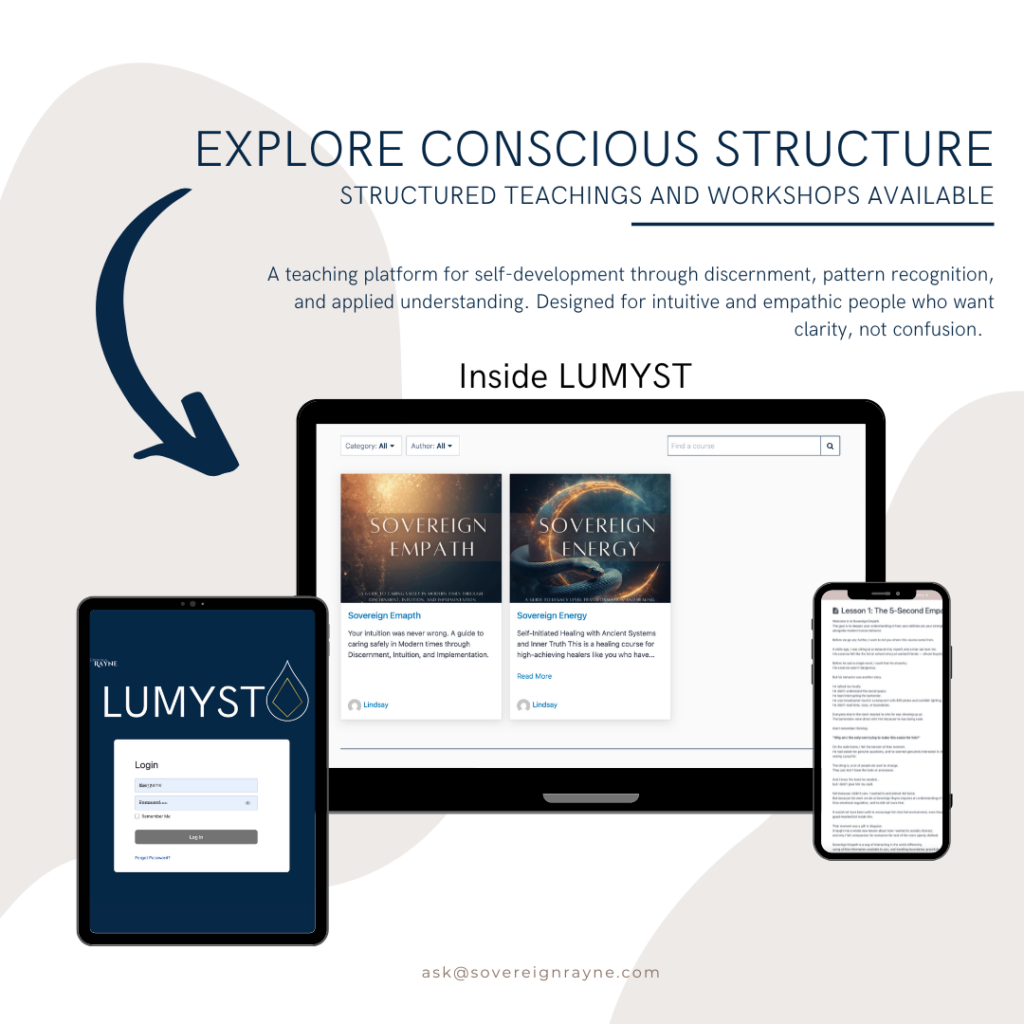
Inside the Sovereign Rayne Lumyst, you’ll find the first steps of this healing journey:
- Energetic insight into emotional patterns
- The Clown Chakra teaching (free in the Lumyst App)
- Earth Star Chakra grounding practices to stabilize your nervous system (free in the Lumyst App)
This isn’t just about surviving the past.
It’s about becoming someone new. Download the app and begin your sovereign path.
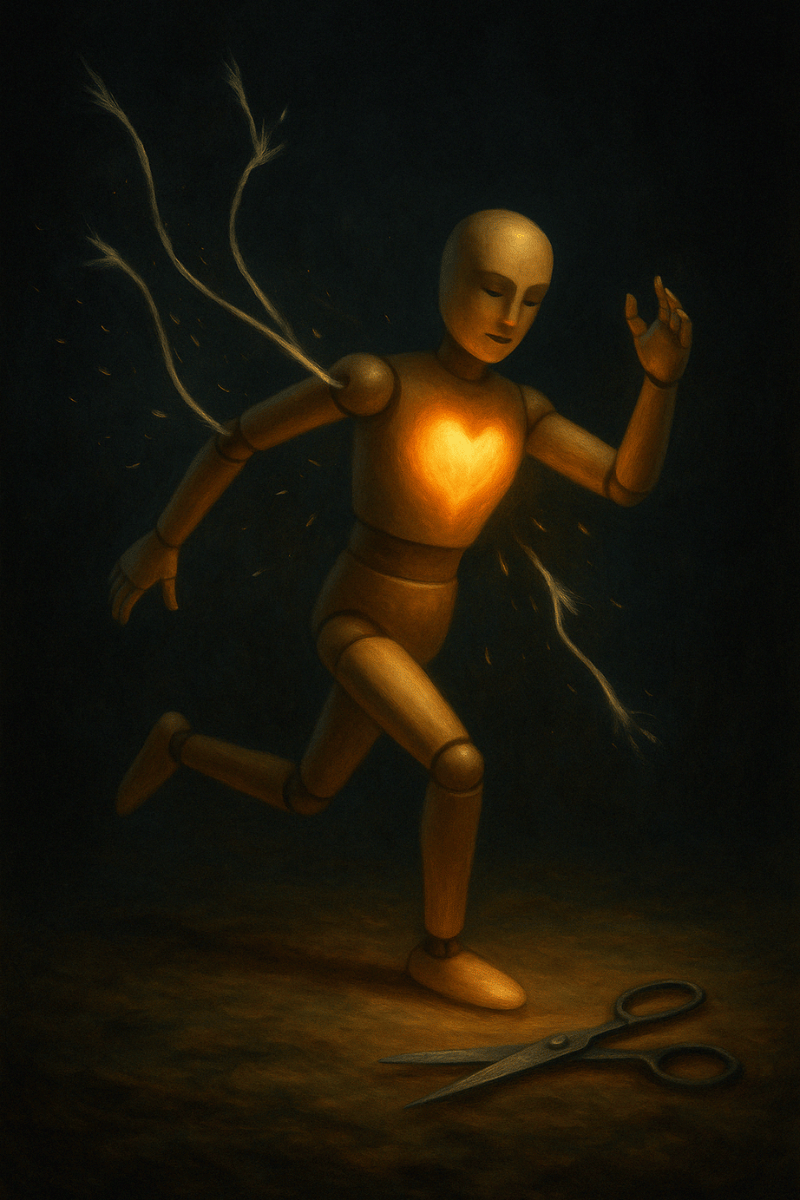
Resources
An environment dictates what can thrive; the resources here are designed to help create an environment that supports your healing.
Invitation
Ready to get ahead of the class?
Sovereign Energy is a modern energetic healing system blending ancient wisdom and trauma recovery. This is where we begin to untangle the illusion, stabilize the field, and build the golden light body that will carry you through your healing journey.
Start clearing the distortion not, and reclaim your magic.
Dr. Ramani speaks from a clinic and personal standpoint with outstanding clarity and a level of conviction and authority that is a valuable informative source.